English
 Italiano
 Français
 Español
 Deutsch
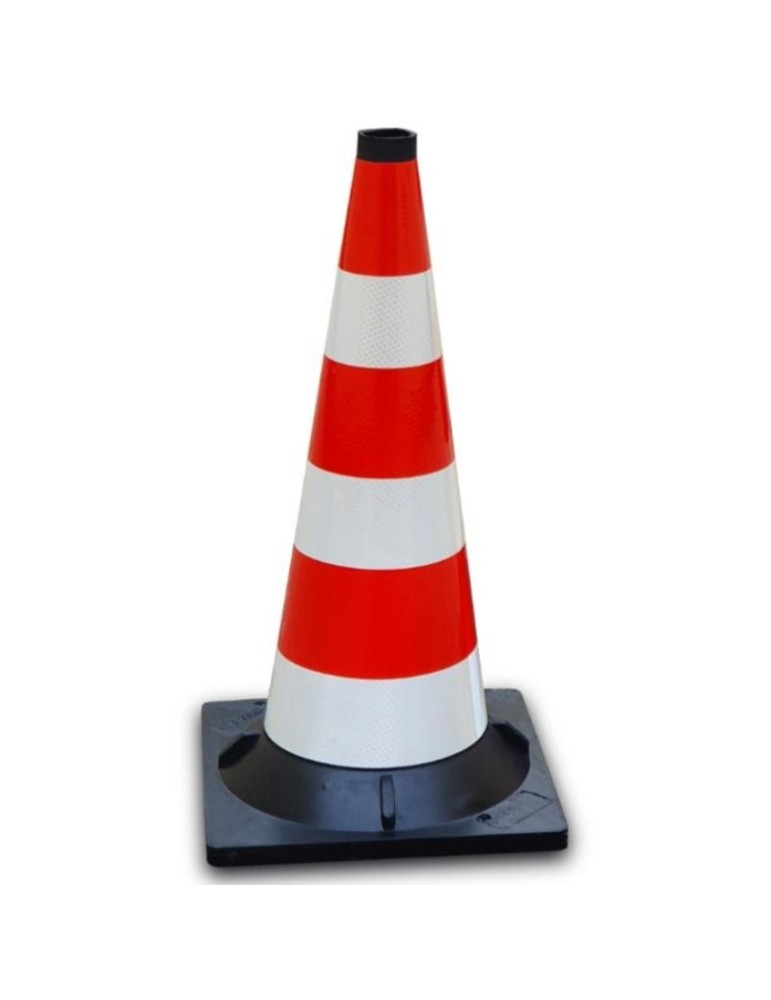
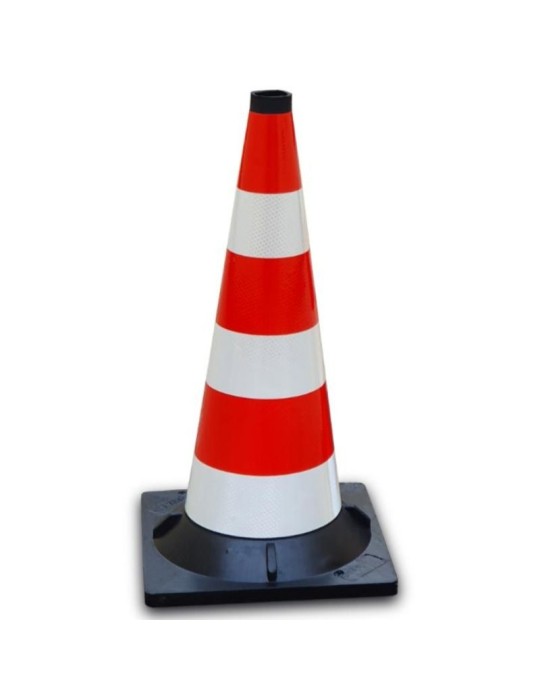

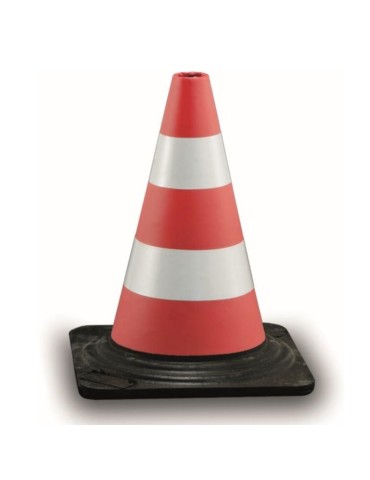
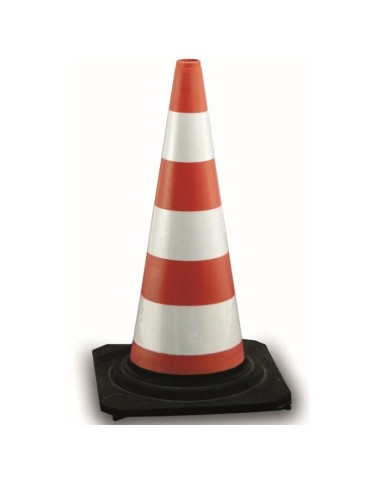
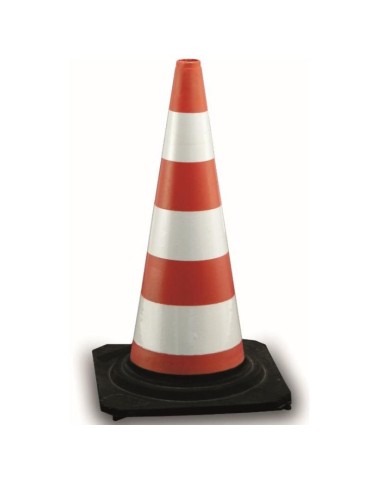
Cones rubber cone tires class 2 3 reflective bands high intensity grade degrees road signs product safety work construction site.
L'ordine entro verrà spedito
Features:The cone is made of highly elastic vulcanized rubber, it is resistant to shocks and crushing due to the passage of vehicles.
The conical part is painted with paints that reduce aging and increase resistance against atmospheric agents.
Class II reflective bands are applied to the conical part to increase the visibility of the cone itself.
The base of the cone has a configuration that allows high stability and reduces rolling in the face of falls to the ground.
The base in the lower part has support feet that guarantee the outflow of water.
The upper vertex of the cone facilitates the grip during installation and removal operations.
Feature description:
• The cone is used to delimit and highlight work areas, for maintenance operations, for marking road markings, to indicate areas affected by accidents, for temporary channelling, for checkpoints, for signalling
of opposite directions of travel and delimitation of temporary obstacles.
Mechanical features:
• Highly elastic vulcanized rubber element.
Miscellaneous
• The spacing of the cone is 12 m in straight lines and 5 m in curves; in built-up areas, the frequency is halved, unless a different distance is necessary for particular road and traffic situations.
The cone must be used to highlight work or maintenance areas lasting no more than 2 days.
Dimensional and technical characteristics:
• Maximum overall dimensions: height 54 cm
• square base: 27.5x27.5 cm
• Weight: 2.5 kg
External surface treatments:
• anti-aging red conical part painting
• application of nr. 3 High Intensity Grade reflective bands
Reference standards
• art. 21, 39 - of the Highway Code
• art. 34, 79 (fig. II 396) - Regulations for the Execution and Implementation of the Highway Code
• Ministerial Decree of 10 July 2002 published in the Official Gazette
Official no. 226 of 26 September 2002 pr/EN 13422 ed. 1998
• Approval with D.M. LL.PP. n.4867 of 19.12.2003
You might also like